

Agrovista’s first Sprinter Wheat, STR Pace, has successfully filled a Norfolk’s farm requirement for an alternative to spring barley after sugar beet.
Mike Wilton, farm manager for Stody Estate, near Holt in north Norfolk, explains there were three key reasons for seeking an alternative to growing quite as much spring barley on the farm, ranging from financial to practical.
The financial incentive is the depressed malting barley market. “Far too often we are selling malting barley off the farm at feed wheat values, particularly in the past two or three seasons,” Mike says. “So until the malting barley market recovers, I might as well grow feed wheat at a similar yield, with fewer constraints on when to plant it.”
And even if the spring malting barley market recovers to nearer £300/t, he suspects the feed wheat market will also rise, making the jump in price irrelevant.
The practical reasons are more farm specific, with the business growing a decent proportion of seed crops. That makes STR Pace, also being grown for seed, a nice fit, Mike says.
“We’re finding more of our winter wheat seed crops struggle with volunteer barley, so we made a strategic decision to move away from growing barley on some parts of the farm to remove it from the previous cropping of some seed crops.”
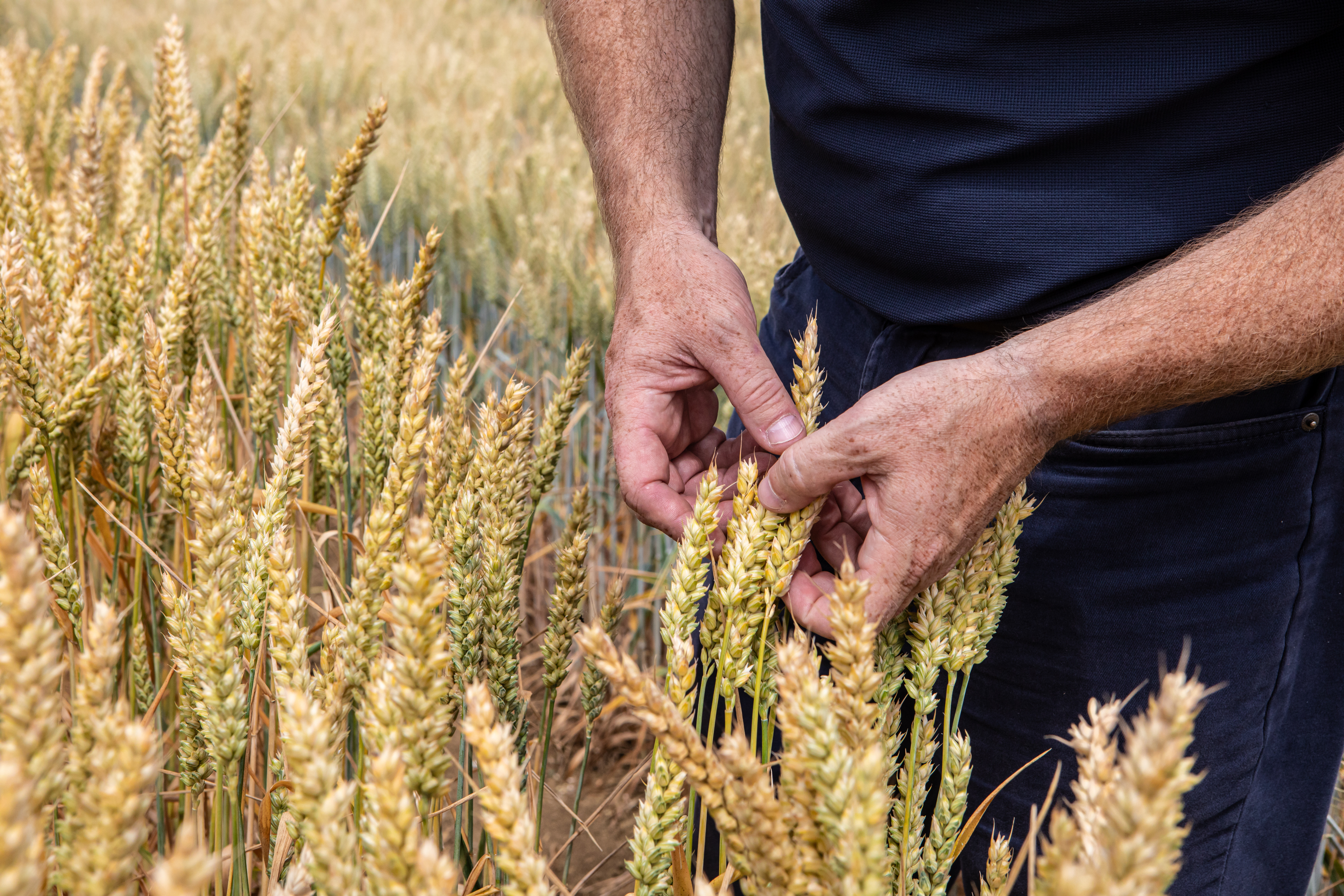
He also grows hybrid barley for seed, which has a slightly larger isolation requirement, meaning wheat fitted better than spring barley on some fields in the rotation.
“When all those factors come together, STR Pace seemed like a good option to try.”
The variety’s extremely wide drilling window was a key factor in his decision to try STR Pace. “It means we have the opportunity to choose when to drill from early November through to the end of March.”
Ideally, he would be drilling it earlier in that window, but last year’s weather led to it being drilled around the end of February, making it similar to a traditional spring wheat, rather than a winter wheat.
In a challenging spring, Mike was fortunate to being able to irrigate the 36ha of STR Pace, albeit not always at the most optimum time because of higher priorities for other crops in the rotation.
“That allowed the nitrogen to be washed in, helping to get nutrition into the plant at the right time,” he says.
“But nonetheless, it was grown on light sandy soil and suffered from the extreme temperatures and lack of rainfall,” he says.
That led to lower yield expectations, with the variety averaging 4.5 to 5t/ha. “The range within all the fields was around 3.5 to 7t/ha, which was driven by soil type more than genetics.”
But the real test was how it did against spring barley. “Neither were wildly exciting, with the spring barley yielding 4-4.5t/ha, but it hasn’t discouraged me from growing Pace again. It will make seed grade, so it is carrying a premium.”
Mike is planning to grow up to 80ha of STR Pace next season, with the plan to drill earlier from the beginning of November as land becomes available through to around mid-February, although he wouldn’t be concerned if weather pushed that back to early March.
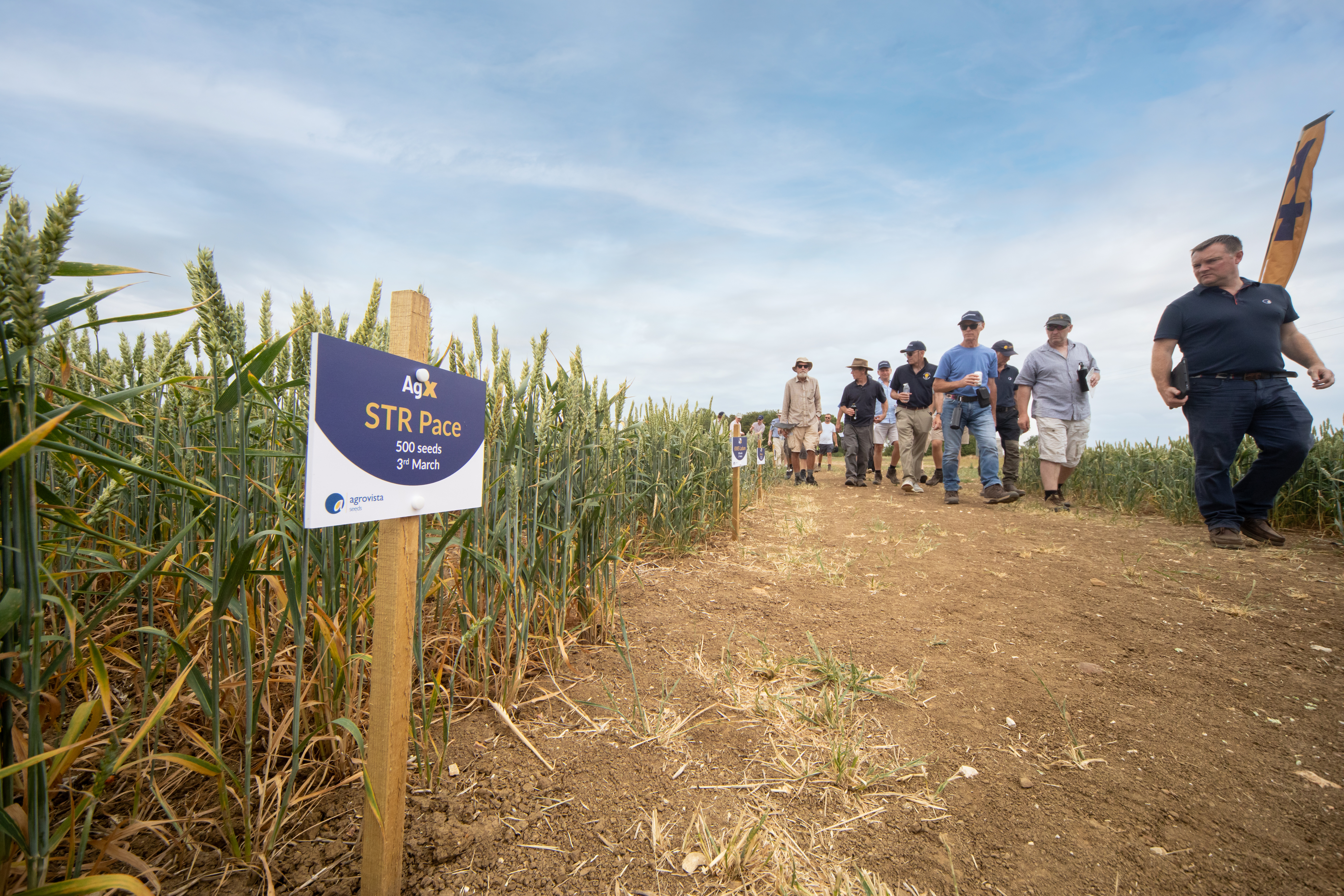
One aspect he’s still needs to research is seed rates. The current crop showed characteristics of a typical spring wheat in that it didn’t tiller to the same extent as a winter wheat. That could be partly weather and soil type related making tiller retention challenging, but if it’s a variety trait regardless of drill date, it has implications for seed rates, Mike says.
“That needs a bit of research because if I’m drilling in November and it shows the characteristics of a winter wheat and tillers vigorously, then I’d only plant 400 seeds / sqm.
“If it’s more like a spring variety, I’ll need to plant a higher seed rate, which is a slight downside,” he says.
“But our experience this year has been it is a good strong variety, seems to have good disease resistance and its ability to drill across a wide window is a useful trait,” he concludes.