


Content previously published in the Farmers Guardian
Field work has progressed since my last article in March, albeit slowly. It has been very stop-start with April living up to its showery reputation, although as I write this mid-month it looks like we are due a few dry days.
Maize drilling under film started at the end of the first week of April. People have been snatching opportunities where seedbeds are dry enough and the going is good. But it is still early days – quite often maize drilling doesn’t start until the second week of April in the north west.
Some farmers are still spreading muck onto fields destined for maize or barley that weren’t dry enough to travel earlier.
There is still a lot of spring barley to drill and some is going in on lighter land. Elsewhere, no-one wants to puddle in spring crops as they never come to anything – as with maize, it pays to wait for the right conditions.
Most winter cereals will have received their final nitrogen fertiliser dressings by the time this article goes out. Any that have not should be treated as soon as possible – the end of April/beginning of May is too late.
Winter cereals generally look good but are mixed in terms of development. Early sown crops are quite advanced, others have been held back by the cooler weather and are not romping on quite as expected.
Winter barleys received T1 applications last week and sprayers will be into winter wheats this week and next.
We haven’t had the level of yellow rust that we saw in wheat last year as farmers have stopped growing the most susceptible varieties, although the disease is evident in one or two this season. I’ll add tebuconazole as needed to the standard T1 fungicide recommendation of Myresa (mefentrifluconazole) and Priaxor (fluxapyroxad and pyraclostrobin).
T1 is also the key timing for chlormequat and trinexapac growth regulators. Usually one application is enough as we don’t use excessive amounts of nitrogen and straw is valuable in this part of the world. We’ll assess fungicide choice for T2 nearer the time.
Quite a number of dairy herds have also gone out over the past week. Grass growth has been fairly good as we have had plenty of moisture and very few drying, cold east winds off the Pennines. We could easily be cutting silage at the beginning of May.
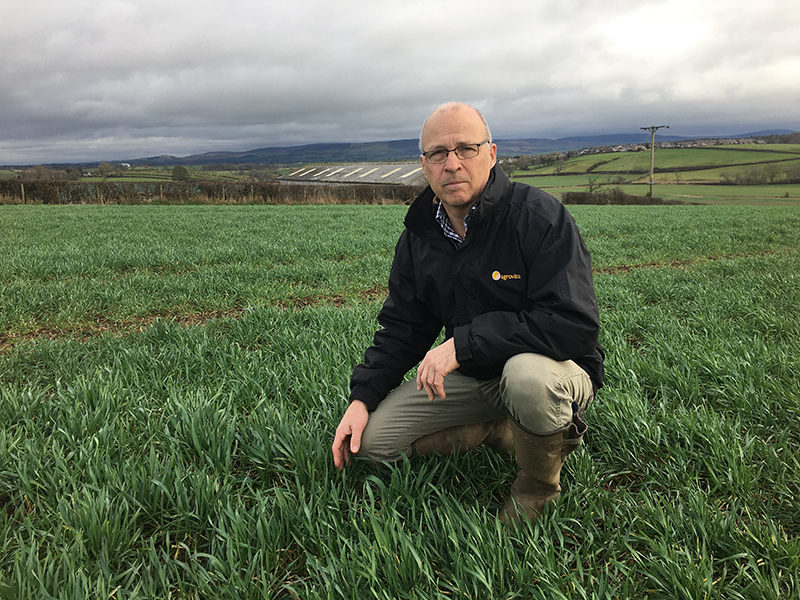 Simon Nelson advises farmers on a wide range of arable and forage crops across Cumbria and into south-west Scotland.