


An organic dairy farm might be the last place you’d expect to be receiving help from Agrovista, a leading supplier of agronomy advice, seed and crop protection products.
But word-of-mouth led the Lywood family to Lewis Butlin and Agrovista’s Rural Consultancy team.
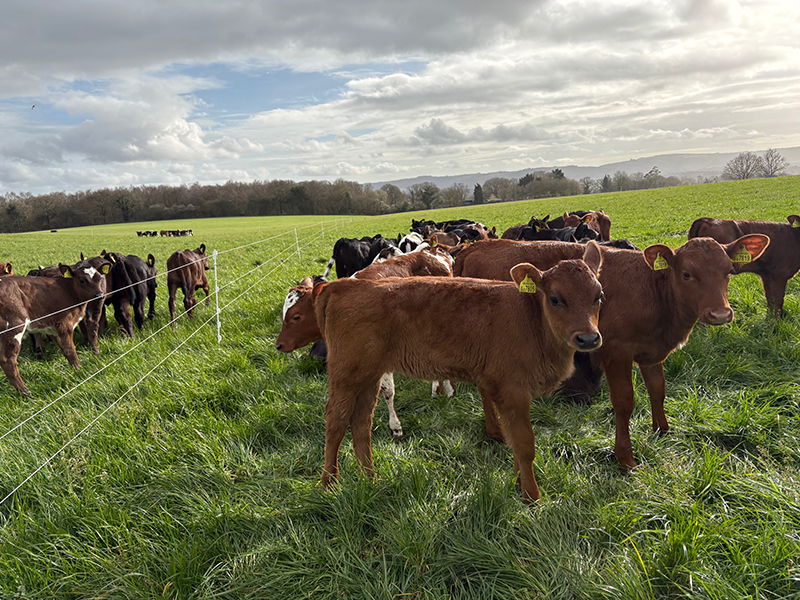
Milking 410 three-way cross British Friesian, Norwegian Red and Jersey cows across two tenanted farms, the West Sussex farm has been working with Lewis since a farming friend and neighbour suggested Kate Lywood and her husband Jeremy Way spoke to him about helping with a Countryside Stewardship scheme application.
“We’ve been working with Lewis for around seven years,” Jeremy says. “I was talking about wanting to do an application with a friend, and he said, ‘you need to talk to [Lewis], who has just done one for us’ and that’s how it started.”
As well as helping with the Countryside Stewardship scheme application, Lewis was also able to help with the farm’s organic conversion that happened around the same time as the working relationship began by applying for the then-available organic conversion payments.
Since those initial examples, Lewis has been integral to helping the farm maximise opportunities presented through various schemes and grants.
“The Countryside Stewardship schemes have evolved into applying for and managing various Sustainable Farming Incentive (SFI) agreements,” Jeremy says. “We’ve had a rough idea of what we wanted to apply for, but once we worked through all the options with Lewis, we’ve added in things that we hadn’t considered doing on his recommendation.”
That’s included adding in payments for hedgerow management and the standalone tree in hedgerow option. “We’ve got miles of hedgerows on this farm with lots of trees. Lewis did all the mapping of those to make sure we didn’t overclaim.”
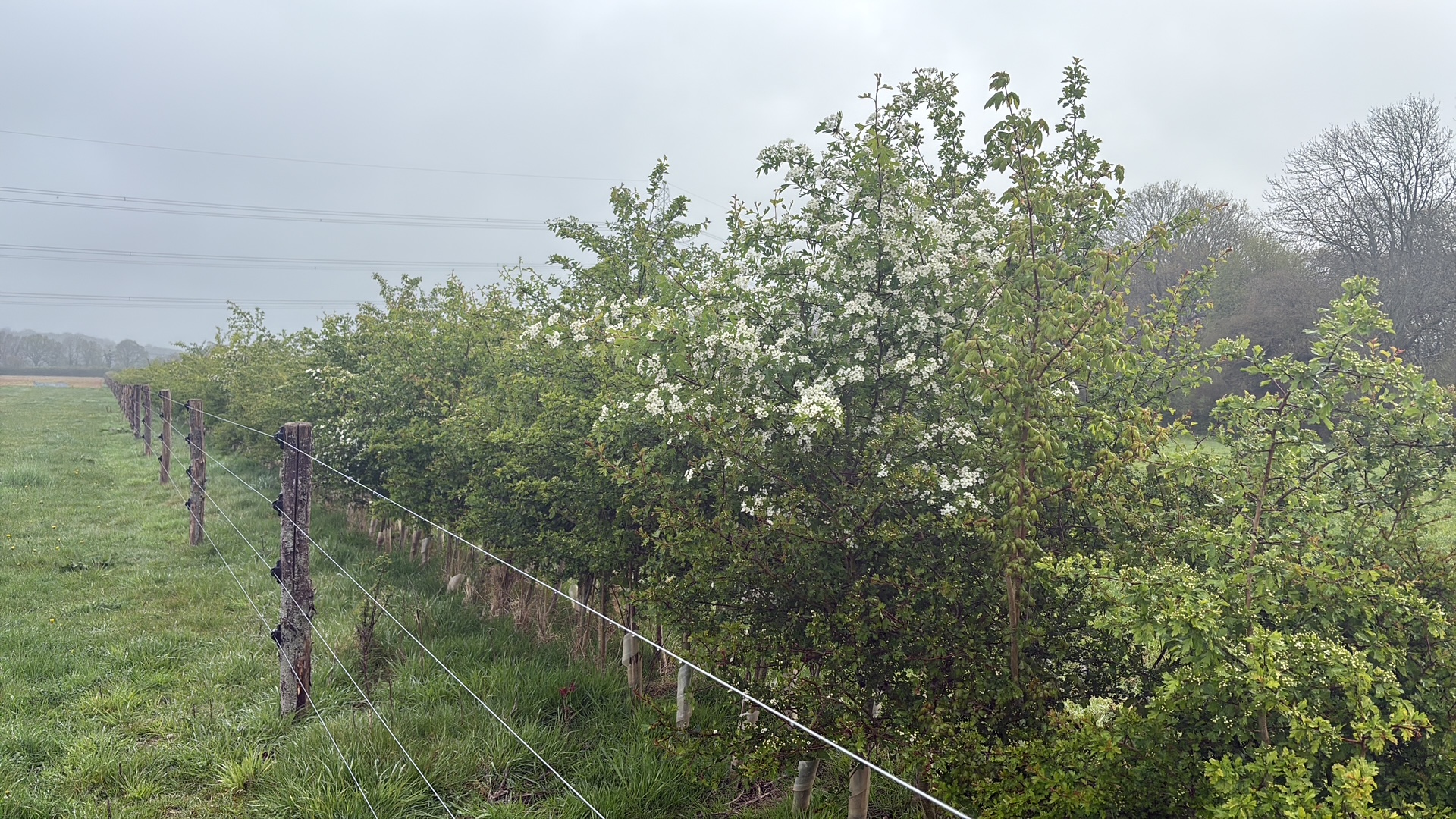
Lewis also managed an application to plant 2.5km of new hedgerows around five years ago, as well as capital grant applications for new fencing.
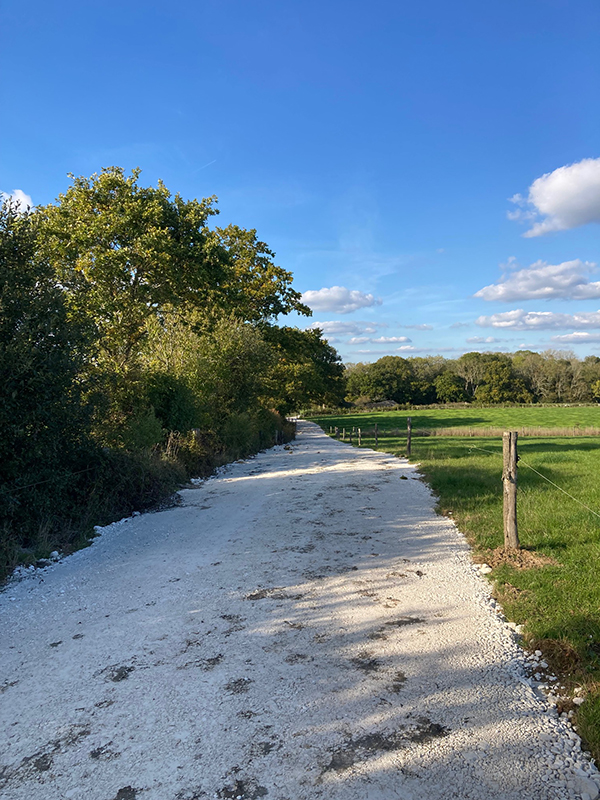
“Last year, we put in a big application for a new cow track through the centre of the farm, which is a critical bit of infrastructure,” Jeremy says.
The track enables the farm to reach further flung grazing fields, particularly at the start and end of the grazing season. “We really struggled with the previous dirt track because as soon as it turned wet – it would only have to rain for a day or two – and the track would become impossible to use to move a large herd of cows from the milking parlour to those fields, even if there was a 40ha of grazing at the end of the track that was dry enough to use.
“Upgrading the track was something we’ve wanted to do for years, but we didn’t have the £38,000 spare to do it.”
That was the eventual value of the Capital Grant, which the farm was able to successfully secure last year to do the work. “We had the support, thanks to Lewis, of the local Catchment Sensitive Farming team locally, which for this type of application is necessary. Without its backing, you can’t apply.”
Lewis also had to factor in the farm being located within a National Park, which potentially adds further complication when seeking planning permission. “You never know what conditions they will ask for,” he says.
This year’s major project is for a new secondary slurry lagoon, Jeremy says. “Applying for the slurry infrastructure grant is a really complex process with the Rural Payments Agency. Lewis has been brilliant, as we couldn’t have navigated the process alone – his expertise in managing those sorts of schemes is second to none.”
The relationship works despite Lewis living in Scotland, Jeremy adds. “He is quite often down in the area because he has lots of clients in the region and makes sure to call to ask whether we want to see him.
“But while there’s no formal meeting schedule, he’s there when we need him and always at the end of the phone. We’ve been talking a lot recently because of the slurry grant process.”