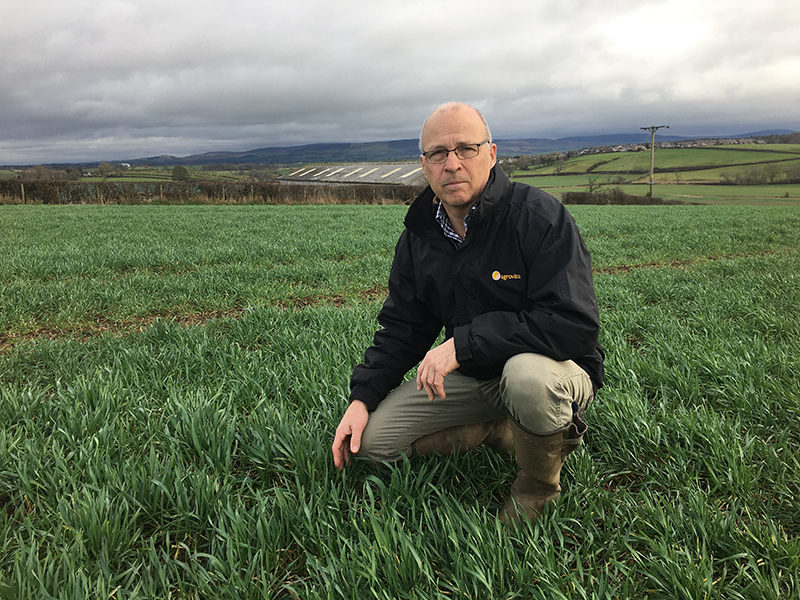


Content previously published in the Farmers Guardian
Unlike other parts of the country, in Cumbria we’re not desperate for rain after 29mm during April. The last of the spring cereals were drilled in the first week of May, while most finished drilling maize the week after.
It’s been the earliest grass silage season that I can remember, with people cutting and lifting silage in late April, as well as in May. Grass growth was helped by a mild winter with very few frosts to check crops, and adequate moisture during spring to keep it growing. Farmers planning multi-cuts this season are off to a flying start and could well be cutting again by the end of the month, with cut fields already greened over.
Ironically, after a winter with few frosts, the late ones in April and May might have more impact, particularly for any uncovered maize drilled in April that was already emerging when the frosts hit. With more growers opting to not cover maize with plastic after two warm favourable springs, hopefully they don’t regret that choice.
Rhynchosporium is the main disease challenge in winter barley, with crops receiving awns emerging fungicide sprays in mid-May, while flag leaf sprays in winter wheat will target septoria and yellow rust with an Iblon (isoflucypram) based product. The latter has been found in susceptible varieties, such as Typhoon, Beowulf and Solitaire, but it’s not at epidemic levels.
There are some worrying levels of barley yellow dwarf virus showing in fields on winter barley and winter wheat. We’re seeing field-level infections in crops drilled in the middle of October after maize.
Typically, these crops only get a pre-emergence herbicide before the gate is shut before winter, so no insecticide will have been applied. But we’re also seeing some infections in some fields that had an autumn insecticide, which suggests it could be a winter or spring infection.
I’ve also noticed lots of aphids currently in these crops, although not in healthy ones. But it means we need to keep a look out for aphids in spring cereals, fodder beet and potatoes.
Weed control in the earliest drilled spring barley crops is now a priority, which as they tend to be on lighter land, will also being topped up with deficient trace elements, such as copper, manganese and zinc.
A single fungicide application will follow in around 2-3 weeks again targeting rhynchosporium.