


Content previously published in the Farmers Guardian
Ongoing mild weather through to the first half of November has kept plants growing later and stronger than normal. The vast majority of autumn-sown cereals look well, and winter covers and forage crops have made the best of the benign conditions.
In quite a few cases we’ve added deeper-rooting fodder radish to brassica-based winter covers after cereals to improve soil structure and drainage. In some crops, these plants are now about three feet tall and flowering.
Elsewhere, multi-species winter cover mixes sown after maize at the end of September or very early October are all through and growing away. Undersown companion crops consisting of grasses and legumes have also greened up well and swards are now filling in.
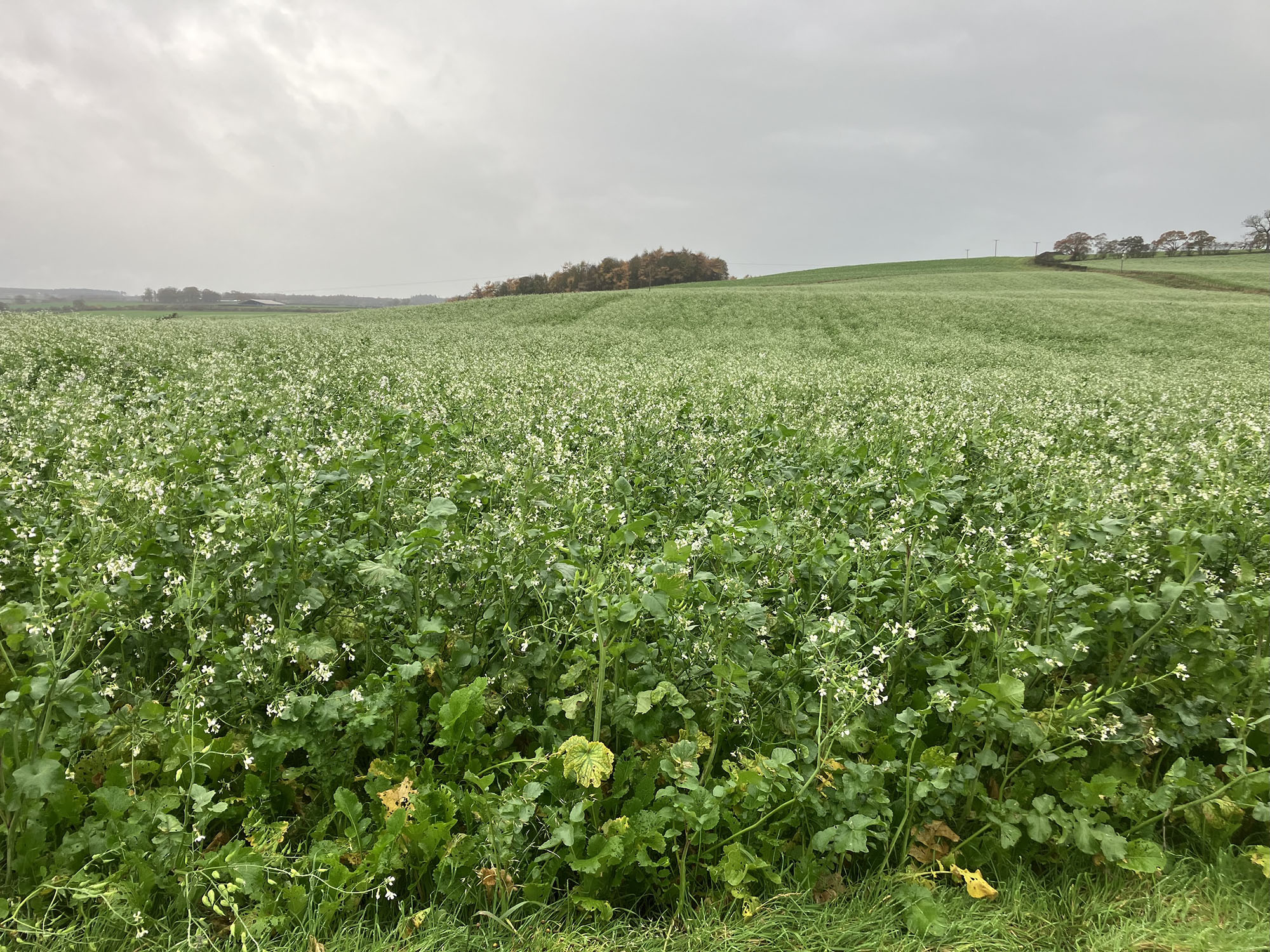 Tall fodder beet in muilti-species cover crop after cereals
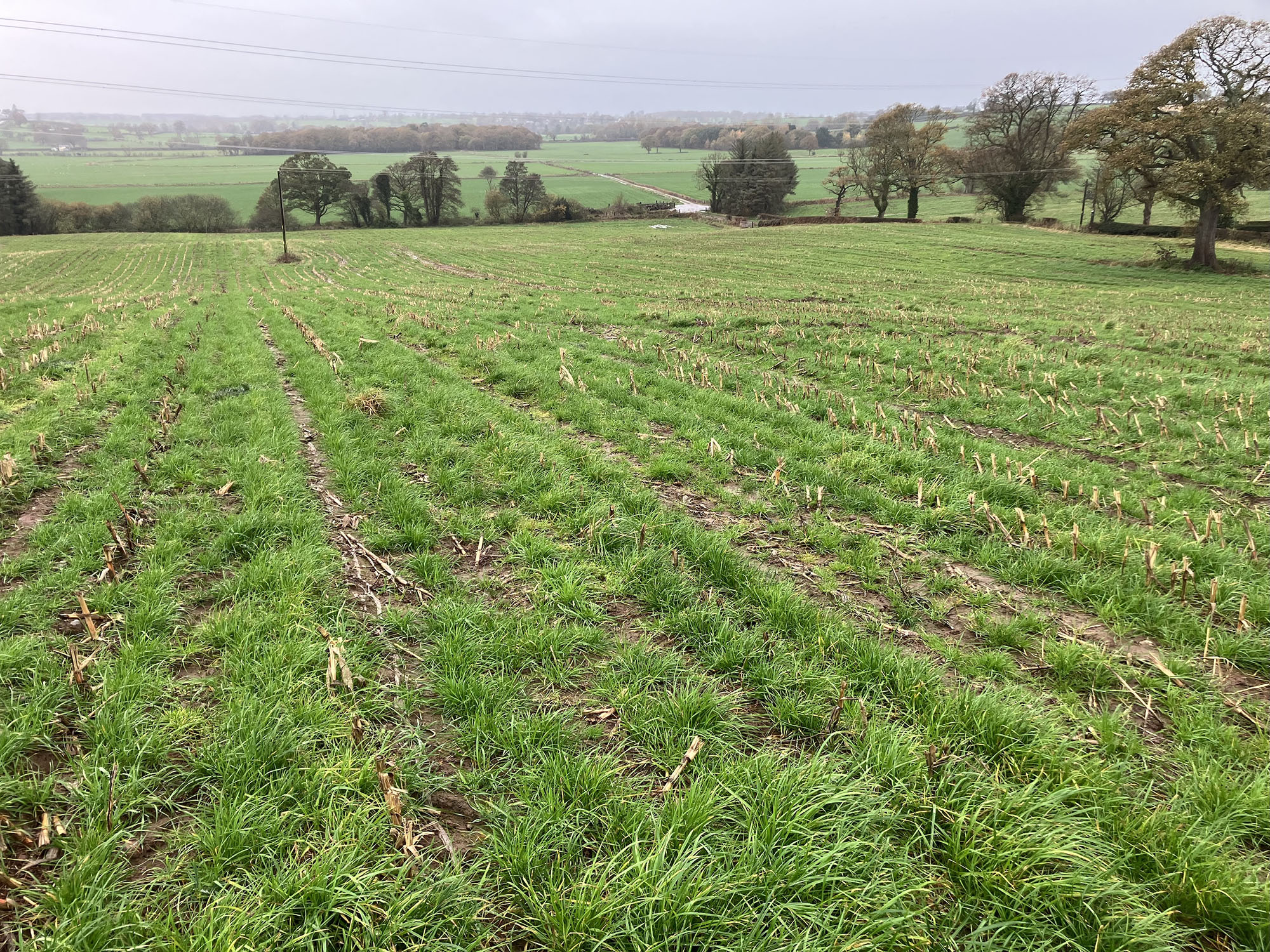 Undersown companion crops in maize have greened up well
In all cases, this late growth will help optimise all the benefits these crops provide; improving soil structure, preventing run-off, keeping soils drier over winter and scavenging nutrients that would otherwise be lost. It will also provide some useful additional sheep grazing where appropriate before the remnants are sprayed off ahead of the following crop.
Even some grass fields cut for silage in early October have produced quite a substantial aftermath, which will provide a bite if necessary. Indeed, if excessive growth continues they need to be nibbled off before the end of the year if possible to avoid excess winter kill, should we actually get some frost. Provided they are not overgrazed, this gives the grass a chance to recover and grow away in time to optimise next season’s first cut.
One downside to the warmer weather is that it has left oilseed rape growers struggling to apply propyzamide to control grassweeds. Best results are achieved when the active is applied to cold moist soils when weed growth is slow.
The normal rule of thumb is to start around bonfire night, but it was far too warm at 15-16°C. Soils are also getting wetter so travelling with the sprayer is becoming a problem and applying propyzamide to saturated soils must be avoided. However, at the time of writing (13 November) the forecast is for cooler and hopefully drier weather over the next few days.
Elsewhere, whilst field tasks are mainly completed, there is still plenty of soil sampling to do and we are also helping growers with their crop and fertiliser plans and taking seed orders in good time. Spring will be here before we know it.
Simon Nelson advises farmers on a wide range of arable and forage crops across Cumbria and into south-west Scotland.